
FREE SHIPPING ON ORDERS OVER $60.00 • FREE SHIPPING ON ORDERS OVER $60.00 • FREE SHIPPING ON ORDERS OVER $60.00 •
What Are Sensory Toys and How Do They Support Child Development?
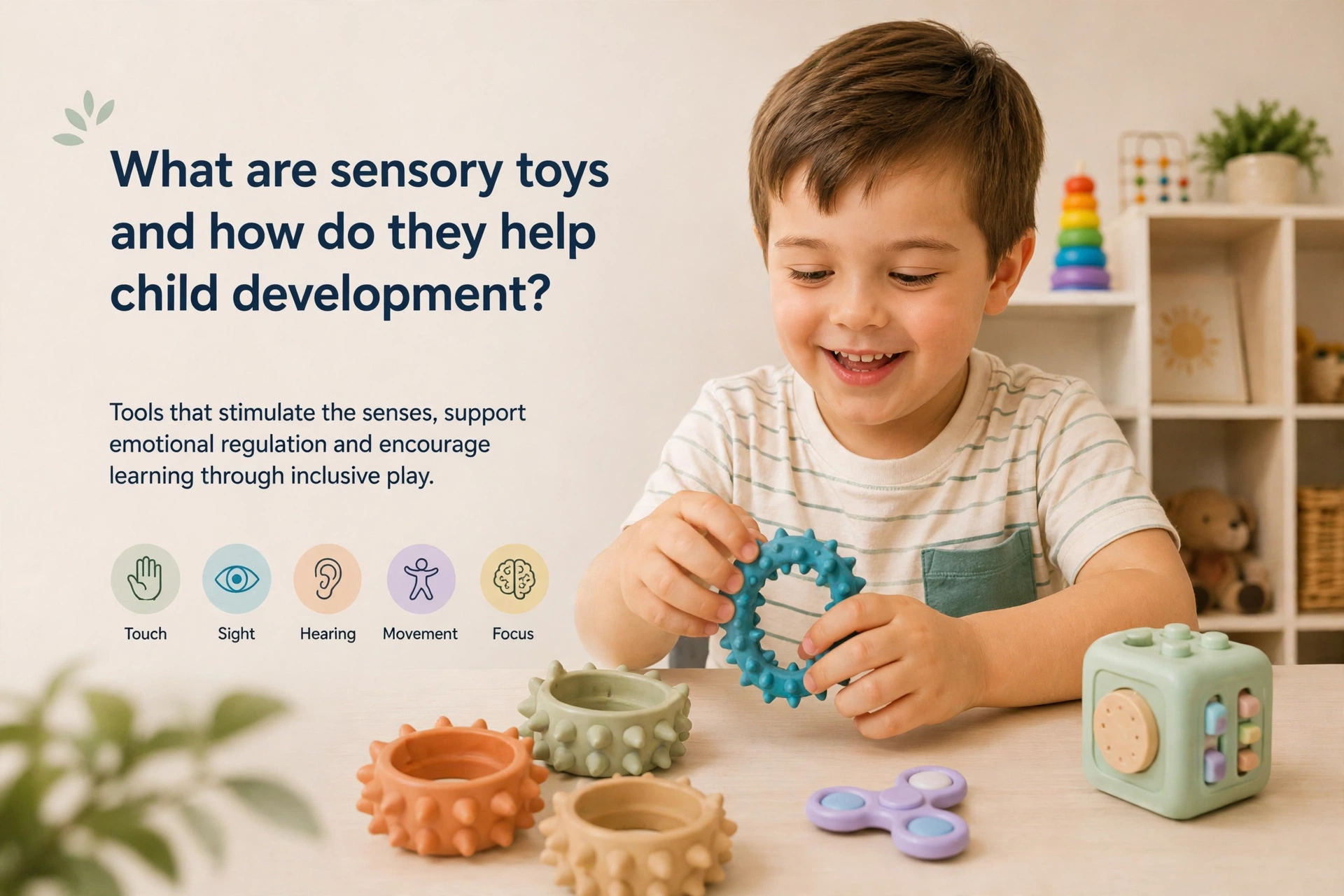
Sensory toys have become valuable tools for supporting children’s emotional, cognitive, and behavioral development. Although they were traditionally associated mainly with specialized therapy settings, today they are also used in homes, classrooms, and spaces designed to support children’s emotional well-being.
At Inclusive Play Toys, we believe that play can become a therapeutically supportive and emotionally positive experience. Sensory toys do more than entertain; they also help children explore the world, regulate their emotions, and develop important everyday skills.
What Are Sensory Toys?
Sensory toys are tools designed to stimulate one or more of the human senses, including:
- Touch
- Sight
- Hearing
- Movement
- Coordination
- Spatial awareness
Many children, especially those with sensory needs, actively seek stimulation that helps them feel calm or focused. Sensory toys can help meet these needs in a safe and positive way.
Key Benefits of Sensory Toys
1. They May Help Reduce Anxiety
Many sensory toys encourage repetitive, soothing movements that may help children manage stress and emotional tension.
2. They Support Concentration
Gentle tactile stimulation may help some children maintain attention during schoolwork or everyday activities.
3. They Encourage Emotional Self-Regulation
Children can learn to recognize when they need to calm down and use sensory tools as a form of emotional support.
4. They Stimulate Fine Motor Skills
Manipulating articulated toys, sensory bracelets, or tactile cubes helps strengthen hand and finger coordination.
5. They Promote Inclusive Experiences
Sensory toys can help children with different needs participate more actively in educational and social settings.
Which Children Can Benefit from Sensory Toys?
Although any child may enjoy sensory toys, they can be particularly helpful for:
- Neurodivergent children
- Children with autism
- Children with ADHD
- Children experiencing anxiety
- Children with concentration difficulties
- Children with sensory sensitivities
- Children with developmental delays
The most appropriate sensory toy depends on each child’s individual needs, preferences, and developmental stage.
The Importance of Therapeutic Play
Play is one of the most natural ways children learn. Through play, children explore emotions, develop social skills, and strengthen their creativity.
Sensory toys can make this process even more enriching, especially for children who need additional emotional or sensory support.
Sensory toys are more than just a trend. They can be valuable tools that support the well-being of many children and families.
At Inclusive Play Toys, we create playful experiences that support emotional well-being, strengthen skills, and promote children’s development through inclusive play.
Inclusive Play Toys
Small tools, big benefits for calm, focus, and development.